
Classics
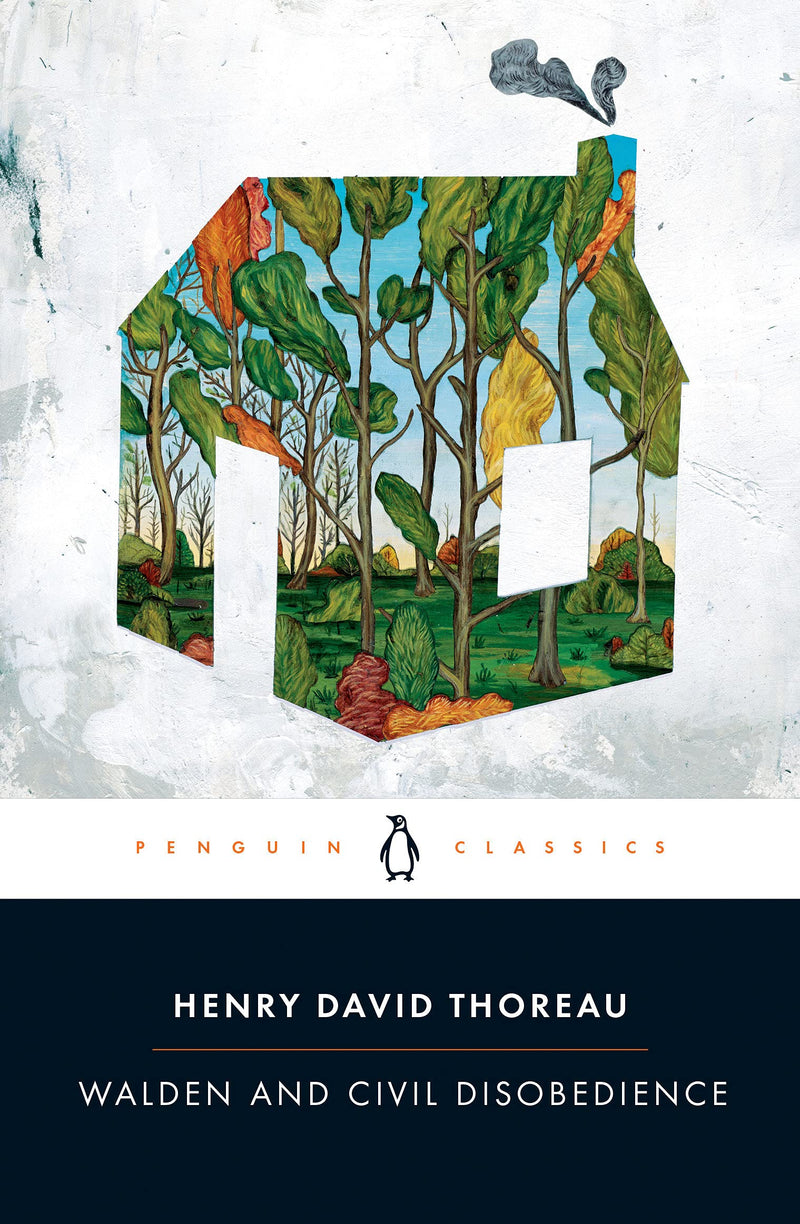
Walden and Civil Disobedience
DETAILED SUMMARY / BACK COVER
Henry David Thoreau's seminal work,
Walden
, chronicles his two-year experiment in simple living amidst the natural beauty of Walden Pond. Disillusioned with the burgeoning materialism and industrialization of 19th-century America, Thoreau sought spiritual truth and self-reliance through a life of deliberate solitude. This classic account blends keen observations of nature with profound philosophical reflections. Complementing
Walden
is
Civil Disobedience
, a powerful essay articulating Thoreau's convictions against slavery and war, advocating for principled living and nonviolent resistance, which has profoundly influenced social movements globally.
Why You Should Read?
Gain insight into the philosophy of Transcendentalism and its emphasis on individualism, nature, and spiritual introspection.
Explore the foundational ideas behind nonviolent civil disobedience, a concept that has inspired leaders like Mahatma Gandhi and Martin Luther King Jr.
Discover a timeless critique of consumerism and societal conformity, encouraging readers to question conventional living and seek personal authenticity.
Experience Thoreau's eloquent prose and his deep connection to the natural world, offering a meditative escape and a call to environmental awareness.
About the Author
Henry David Thoreau
(1817–1862) was an American naturalist, essayist, poet, and philosopher. A leading Transcendentalist, he is best known for his book
Walden
, a reflection upon simple living in natural surroundings, and his essay
Civil Disobedience
, an argument for individual resistance to an unjust state. His writings on nature and civil disobedience have had a lasting impact on political thought and environmentalism worldwide.
Available at Bajrabarahi Books.
ARCHIVAL RECORDS & TECHNICAL DETAILS
TITLE (NAME)
WALDEN AND CIVIL DISOBEDIENCE
AUTHOR
HENRY DAVID THOREAU
CATEGORY
Classics
PRICE
Rs. 1680.00
PUBLISHER
Penguin Classics
ISBN / SKU
SKU-5479
FORMAT
Paperback (PHYSICAL)
PAGES / LANGUAGE
250 Pages / English
WEIGHT
0.31 kg (308g)
EDITION
Standard Edition